Move your USDT from the Ethereum network to TRON in one transaction. Enter the amount, send from your Ethereum wallet, and native USDT TRC20 lands on your TRON address in about 67 seconds — fee from $3.07, no sign-ups, no custody.
| You send (ERC20) | You receive (TRC20) | Fee | Time | Action |
|---|---|---|---|---|
50 USDT | 46.93 USDT | $3.07 | ~1–2 min | Convert → |
100 USDT | 96.85 USDT | $3.15 | ~1–2 min | Convert → |
500 USDT | 496.28 USDT | $3.72 | ~1–2 min | Convert → |
1 000 USDT | 995.64 USDT | $4.36 | ~1–2 min | Convert → |
5 000 USDT | 4 989.63 USDT | $10.37 | ~1–2 min | Convert → |
10 000 USDT | 9 982.16 USDT | $17.84 | ~1–2 min | Convert → |
50 000 USDT | 49 918.92 USDT | $81.08 | ~1–2 min | Convert → |
100 000 USDT | 99 767.70 USDT | $232.30 | ~1–2 min | Convert → |
USDT ERC20 and USDT TRC20 are the same dollar-pegged Tether issued on two different networks. Converting between them doesn't change what you hold — it moves your USDT from the Ethereum rail to the TRON rail through a cross-network swap — in effect an ERC20 to TRC20 bridge, not a wallet transfer. You send native ERC20 USDT from your Ethereum wallet and receive native TRC20 USDT on your TRON address; no wrapped tokens on either side.
The main reason people transfer USDT ERC20 to TRC20 is cost: sending USDT on Ethereum means paying gas in ETH, which can run into dollars per transfer, while the same transfer on TRON costs cents. TRC20 is also the most widely accepted USDT format among exchanges and OTC desks.
Under the hood the swap runs on audited routing infrastructure — Symbiosis, Chainflip and THORChain — and is fully non-custodial: funds move directly between your own wallets, with no account, no KYC and no service holding your money in between.

Tether USD (USDT) on ERC20 currently trades at roughly $0.9991 and holds about 41% of all USDT in circulation. Issued by Tether on Ethereum under the ERC-20 standard — the default USDT for Ethereum DeFi and most exchange deposits, with gas paid in ETH.
Tether USD (USDT) on TRC20 currently trades at roughly $0.9991 and holds about 50% of all USDT in circulation — the largest share of any network. Issued by Tether on TRON under the TRC-20 standard — the busiest USDT rail: transfers settle in seconds and cost cents, which is why most OTC desks and exchanges prefer it.
The single most expensive mistake with USDT is sending it over the wrong network. ERC20 and TRC20 are incompatible rails: a plain wallet transfer from one to the other doesn't arrive «slowly» — it doesn't arrive at all. To move between them you swap USDT ERC20 to TRC20 through a cross-network route.
A quick habit that prevents most of these losses: read the first characters of the address you're pasting. Ethereum addresses always start with 0x, TRON addresses with T. If an exchange asks you to pick a network for a USDT deposit, that choice matters more than the address itself.
Also check the amount limits before you convert ERC20 to TRC20 online: this route accepts from 50 USDT to 100,000 USDT per swap. Amounts outside the limits are rejected by the widget before anything is signed.
Never send ERC20 USDT straight to a TRON address, or the other way around — the transfer will lose the funds. Already sent it? Here's what you can still do →
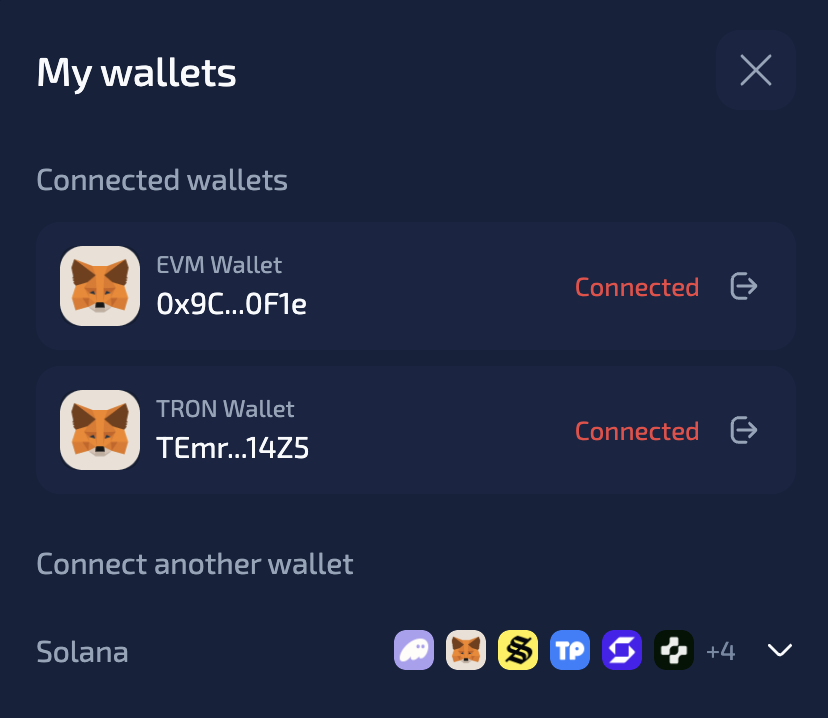
An EVM wallet (MetaMask, Trust Wallet) for Ethereum and a TRON wallet for receiving — both stay in your control.
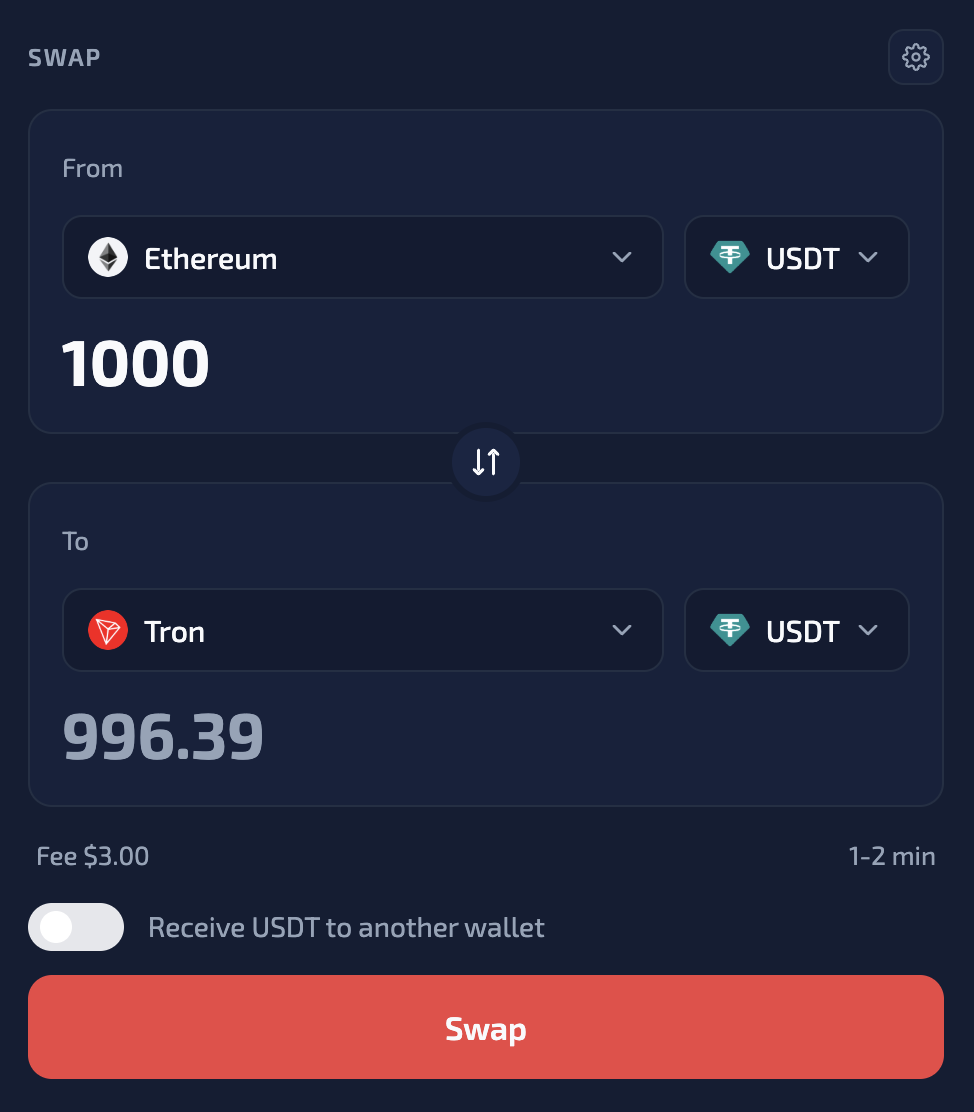
From: Ethereum · USDT ERC20. To: TRON · USDT TRC20 — preselected on this page.
You see what you'll receive, the fee and the time before you sign anything.
Confirm in your wallet and wait for the operation to complete — USDT TRC20 lands on your TRON address in about 67 seconds.
The same conversion through an exchange means signing up, passing KYC and handing your USDT to someone else while it moves. Here is the full trade-off, price included.
| Criterion | TronBridge | Exchange withdrawal | Custodial swappers |
|---|---|---|---|
| Account & KYC | ✓ none — connect a wallet | ✗ sign-up and full KYC | ~ KYC on larger amounts |
| Custody of your USDT | ✓ stays in your wallet | ✗ held by the exchange | ✗ held while the swap runs |
| Steps | ✓ one transaction | ✗ deposit → trade → withdraw | ~ one swap, varies |
| Time | ✓ 67 seconds | ✗ 64 confirmations, then processing | ~ 10–60 minutes |
| Cost on 1 000 USDT | ~ $4.36 | ~ ≈ $2.00 | ~ ≈ $17.94 |
You pay a little more than an exchange withdrawal on this route, and in exchange nothing about you is collected and nothing of yours is held. Exchange cost includes the Ethereum deposit transaction plus the KuCoin withdrawal fee for TRON; custodial swapper quote from ChangeNOW. Quotes as of .
TRON is the busiest USDT network: a large share of all Tether in circulation lives on TRC20, and day-to-day transfers there cost cents and settle in seconds. That's why most exchanges, OTC desks and payment counterparties accept TRC20 deposits by default.
The common cash-out path works the same way: convert USDT to TRC20, deposit it to a service that accepts TRC20, and withdraw from there — the ERC20 to TRC20 conversion on this page is the cheap step of that chain.
When you would go the other way: Ethereum DeFi and some services only credit ERC20 deposits. The reverse route is USDT TRC20 → ERC20.
Questions people actually search for this pair.
Yes. It's the same dollar-pegged USDT moving from the Ethereum network to the TRON network. Enter the amount in the widget above, send USDT from your Ethereum wallet, and receive USDT TRC20 on your TRON address in about 67 seconds.
Same coin, different networks. Both are Tether USD worth about $1. ERC20 lives on Ethereum, where addresses start with 0x; TRC20 lives on TRON, where addresses start with T. Wallets and fees differ; the value doesn't.
No — a direct wallet transfer to the wrong network loses your funds, because the networks are incompatible. Use a converter like this one: it swaps across networks properly.
TRC20. Sending USDT on TRON typically costs cents, while Ethereum gas can run into dollars. That is the main reason people convert to TRC20 for transfers.
From $3.07 on 50 USDT to $232.30 on 100,000 USDT — you see the exact fee in the widget before you sign. No hidden spread on top.
No. The swap is non-custodial: no sign-ups, no KYC. You connect a wallet, sign one transaction, done.
About 67 seconds once your Ethereum transaction confirms.
You can — exchanges route it through deposit and withdrawal with sign-up and KYC, and Trust Wallet uses a built-in swap provider. The widget above does the same conversion straight from your own wallet: no account, no KYC, and the exact fee shows before you sign.